‘Apapane
Himatione sanguinea
Conservation Status:
Vulnerable
Food:
Nectar, insects
Habitat:
4,100 ft +
Description
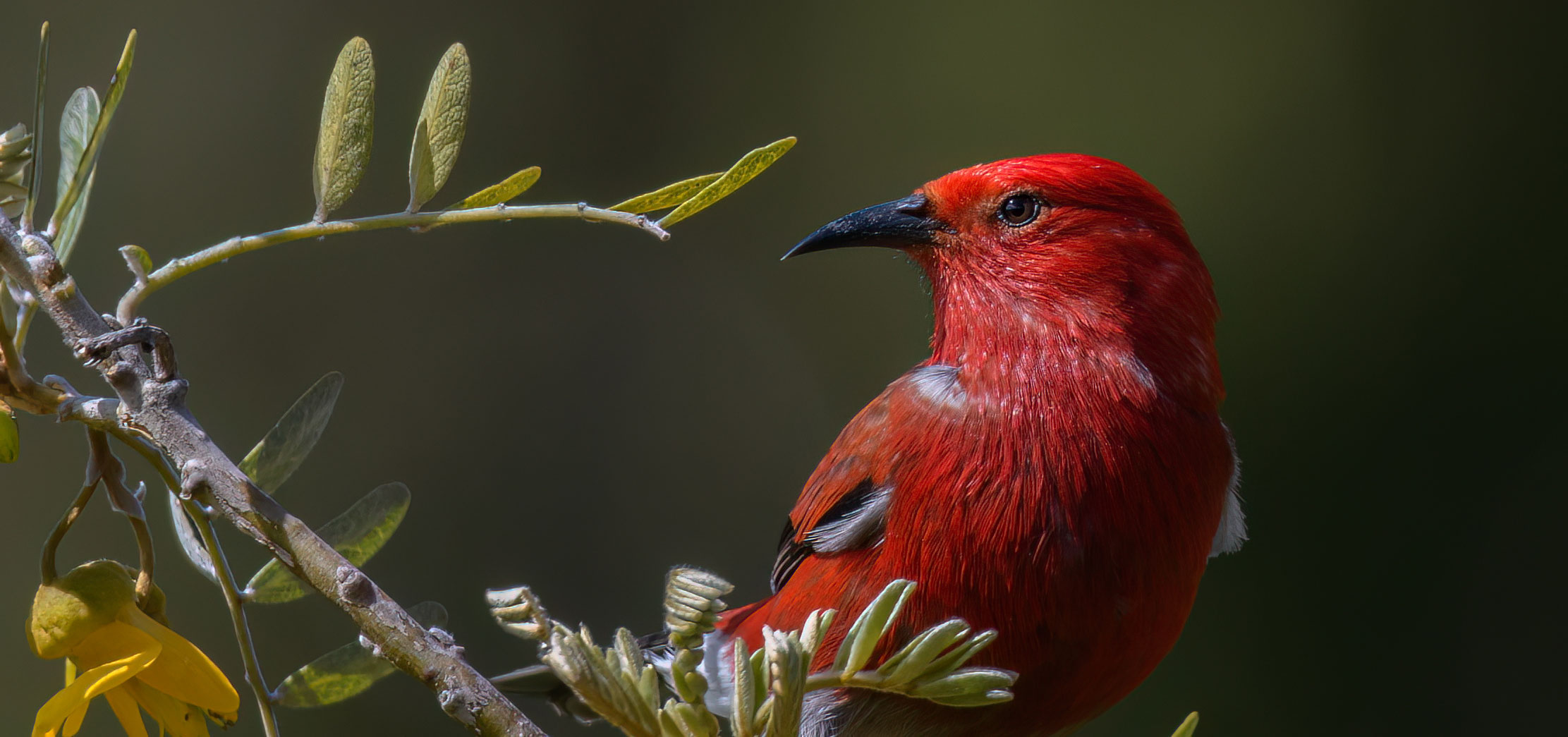
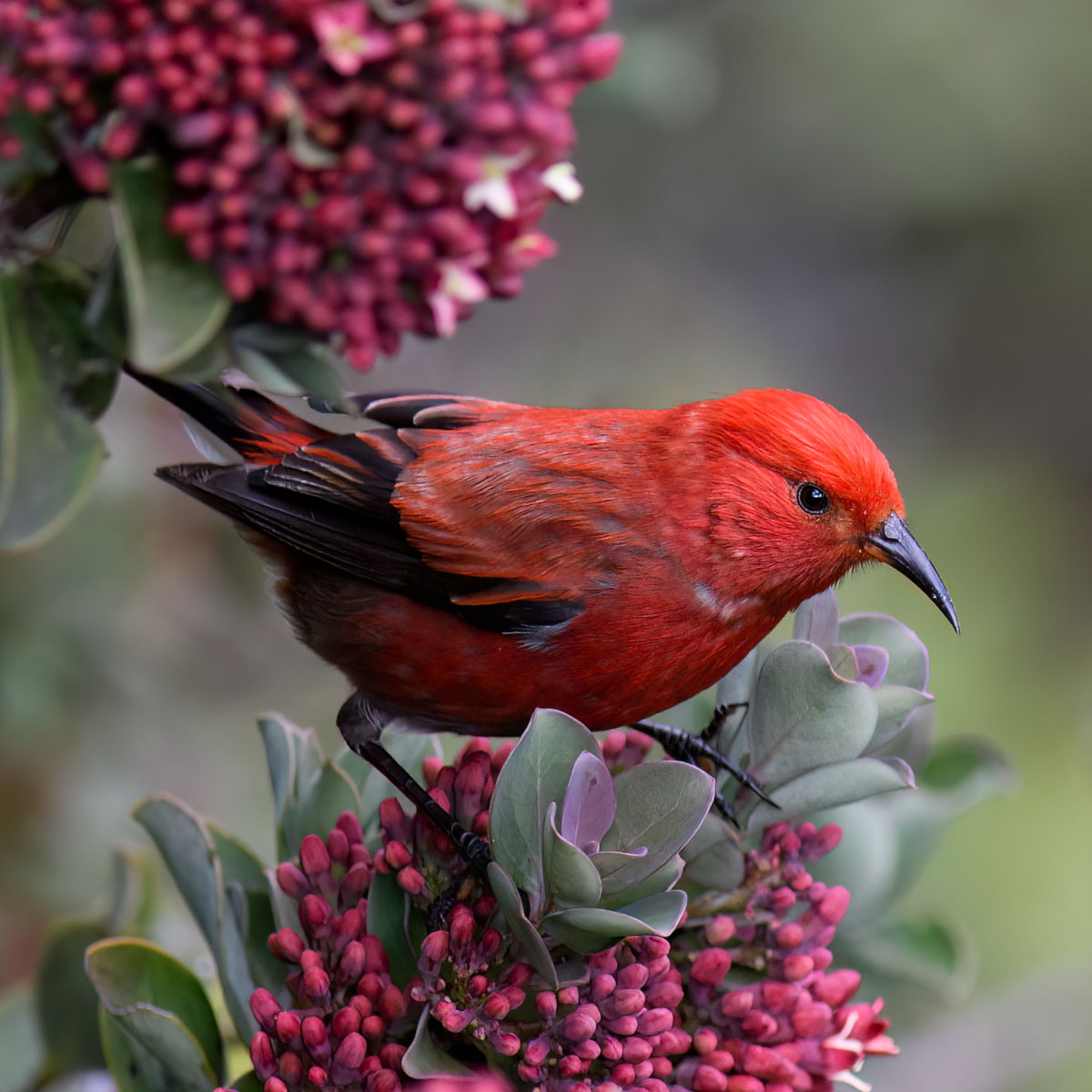
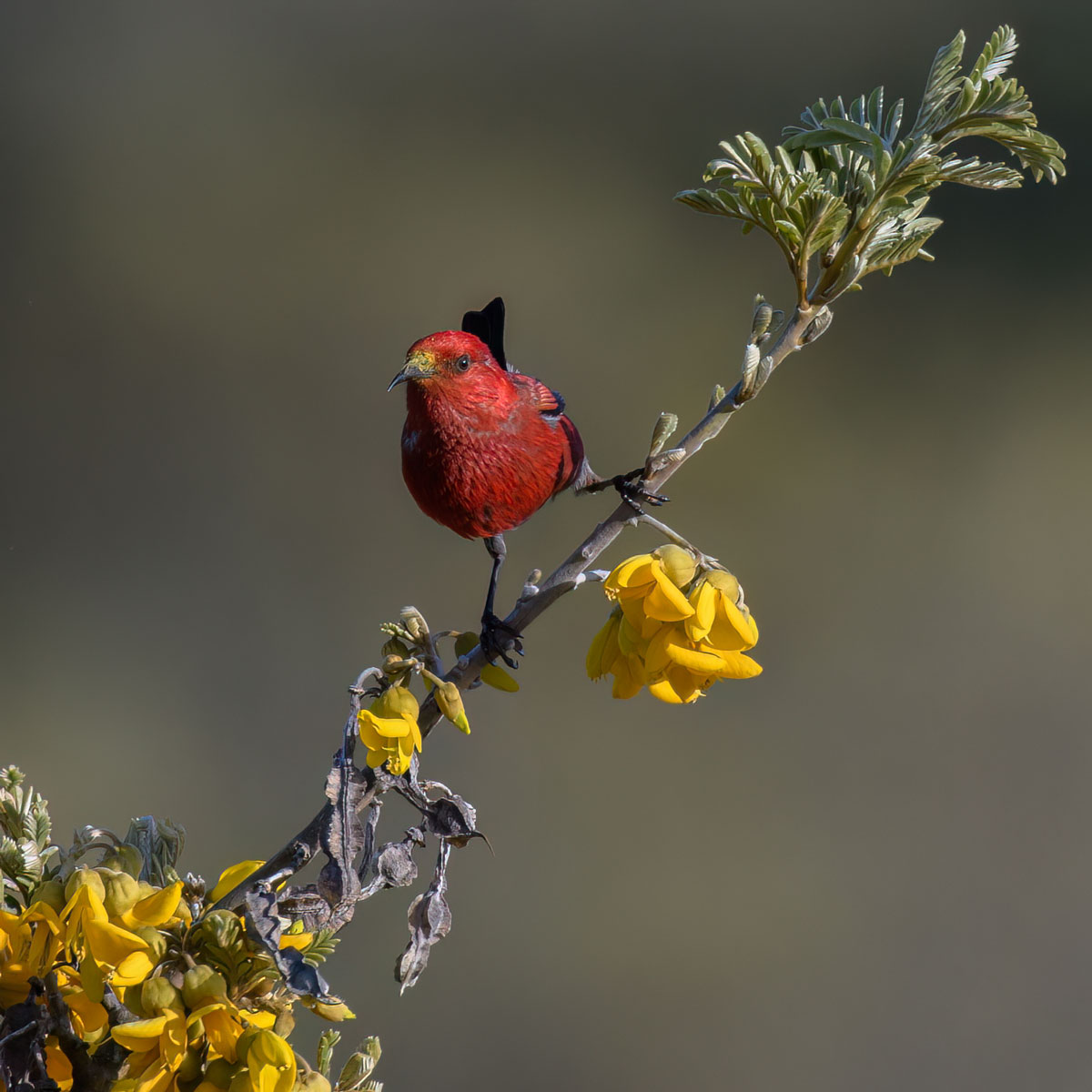
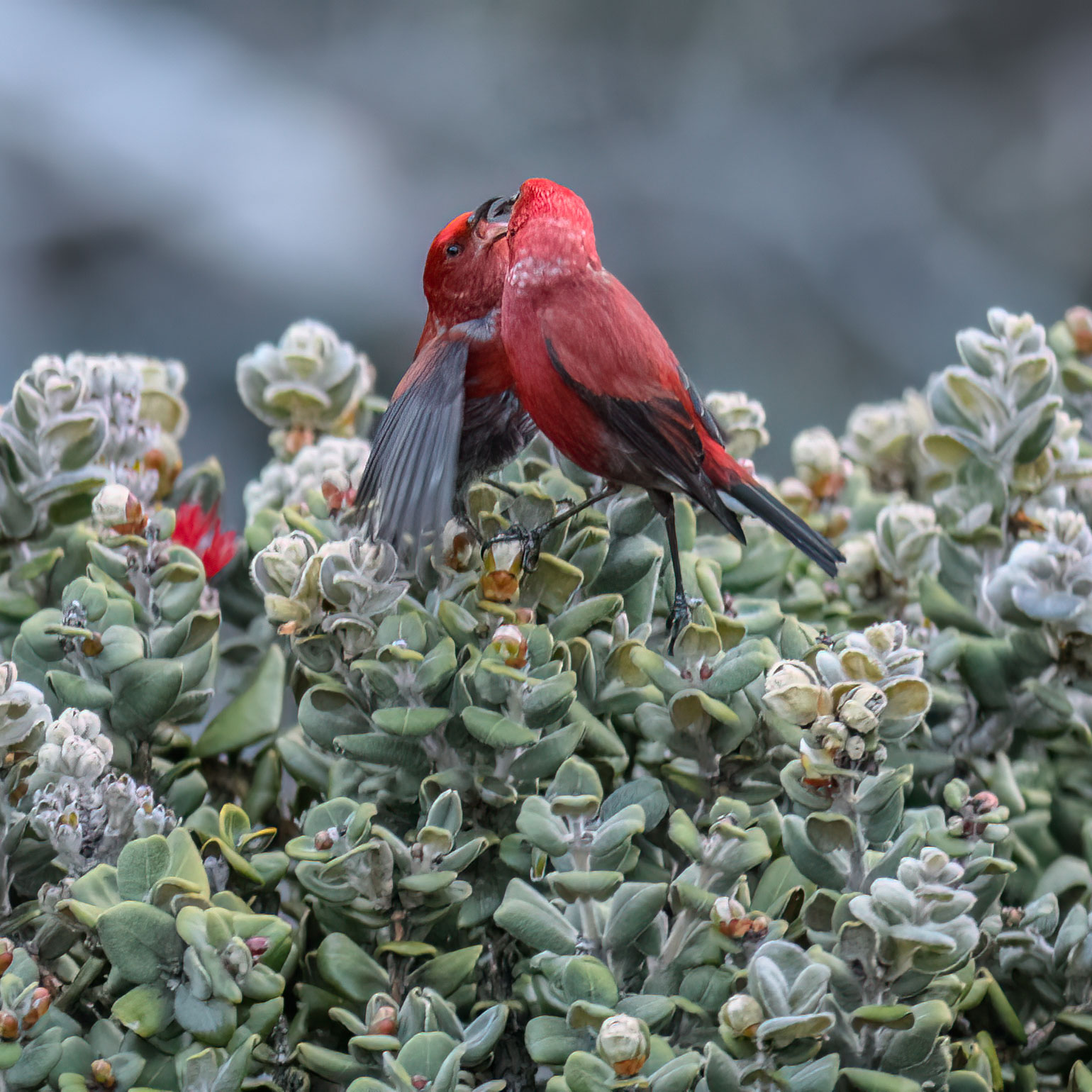
The ‘apapane is a widespread nectar-loving honeycreeper, found across much of the main Hawaiian Islands. Adults are bright crimson with dark wings and tail and prominent white undertail coverts. The head is usually brighter than the rest of the plumage. Their brush-tipped tongues may protrude, making their bill tips look white. The ʻapapaneʻs tail is characteristically cocked up. Like any good pollinator, after feeding on flower nectar, their faces are often covered in pollen giving it a yellowish cast.
Habitat and Behavior
ʻApapane are found around flowering trees, particularly ʻōhiʻa lehua. They often perch conspicuously on the outer clusters of flowers to feed on nectar with their brush-tipped tongues and assist with ʻōhiʻa pollination. They are excellent flyers and often range widely in search of nectar sources. ‘Apapane are relatively abundant but are restricted to forested habitats and are dependent on nectar sources. Small flocks of ‘apapane frequently fly high over forested ridges.
Past and Present
‘Apapane are the most abundant native honeycreeper in the Hawaiian Islands. They are found in montane forests above 4,100ft in elevation. ʻApapane are abundant on Kaua’i, Maui, and Hawai’i Island. They are locally common on O’ahu, but now scarce on Moloka’i and Lāna’i.
Conservation Efforts
ʻApapane are vulnerable to the same threats as other Hawaiian honeycreepers. Habitat loss, introduced diseases, and introduced predators continue to take a toll on all of Hawaiʻiʻs native forest birds. In recent years, detections of ʻapapane in low-elevation forests suggest that this species may be developing some resistance to avian malaria.
Cultural Significance
Much like ʻiʻiwi and the other honeycreepers, ‘apapane are deeply revered in Hawaiian culture. Like all native birds in Hawaiʻi, ʻapapane are mentioned in the kumulipo (Hawaiian creation chant) and their feathers were incorporated into traditional feather work on behalf of Hawaiian ali‘i.
‘Apapane Abundance= Malaria Resistance?
Increased detections of ʻapapane in low-elevation forests are a hopeful sign that this species might be developing a resistance to mosquito-borne diseases.
Listen to ‘Apapane
‘Apapane have a wide variety of calls and songs, including squeaks, whistles, rasping notes, clicking sounds, and melodic trills. Some songs are lilting and canary-like; others are harsher and mechanical sounding.