Maui ‘Alauahio
Maui Creeper; Paroreomyza montana newtoni
Conservation Status:
Endangered
Food:
Insects
Habitat:
3,000 ft +
Description
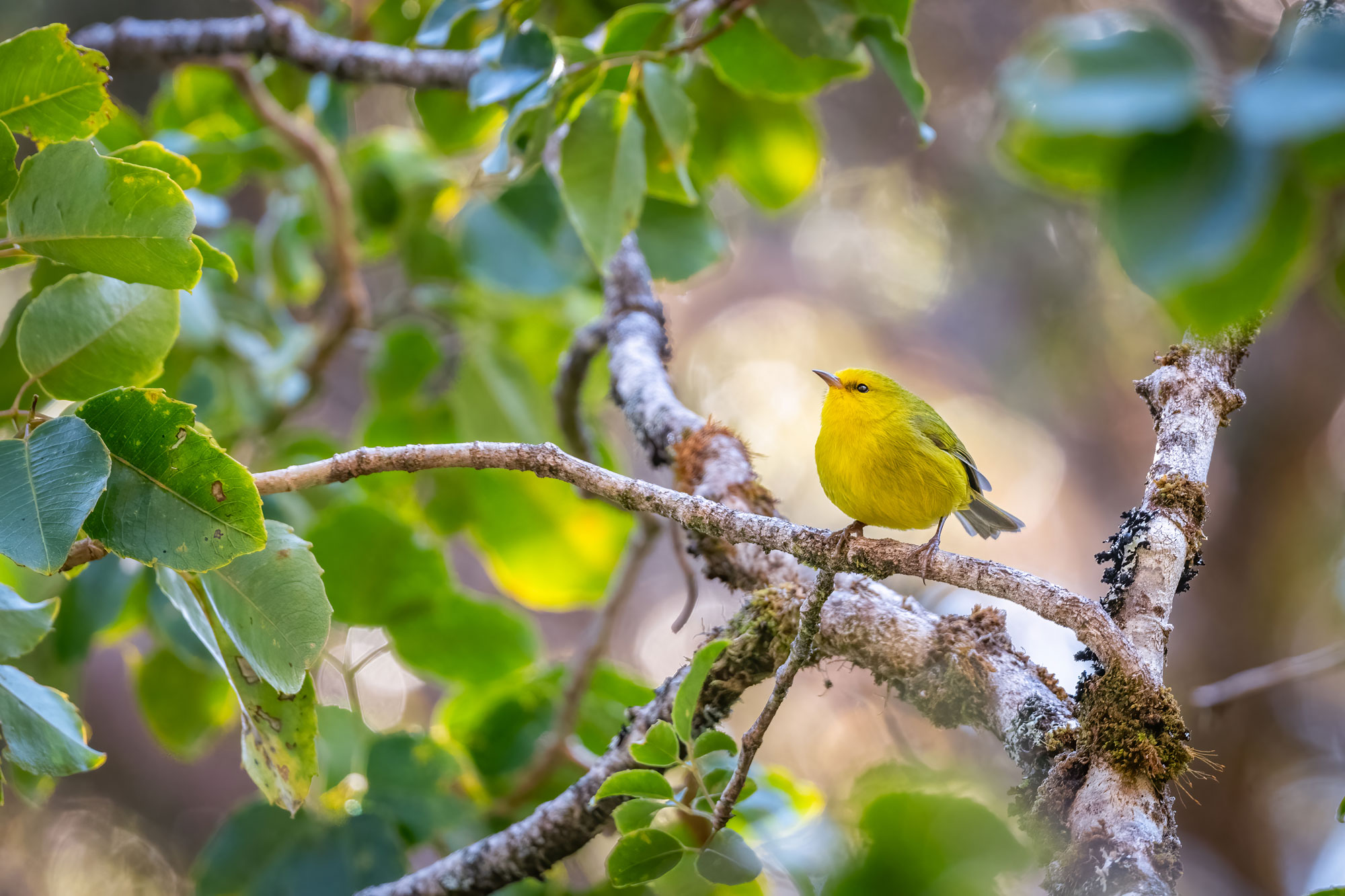
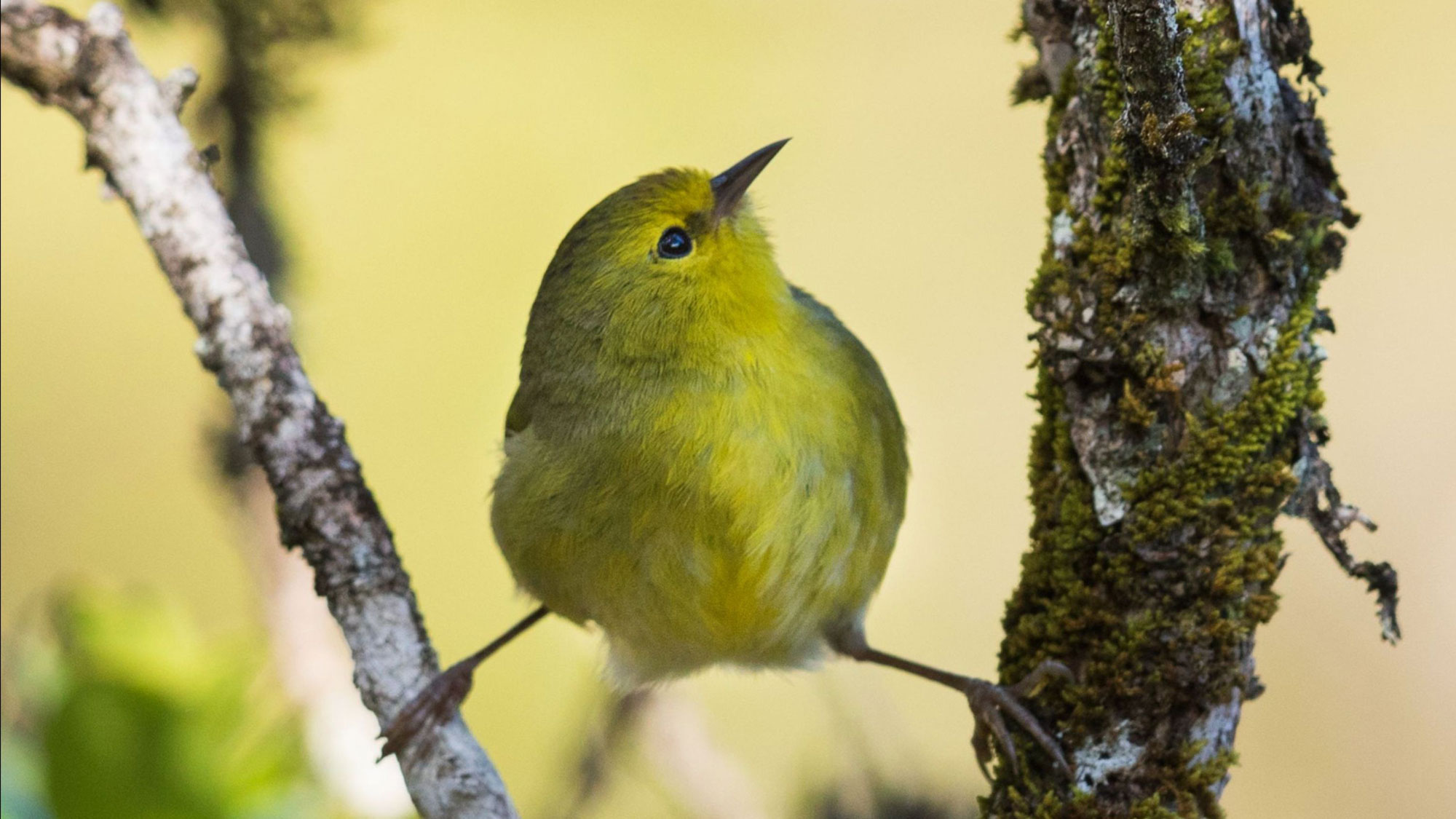
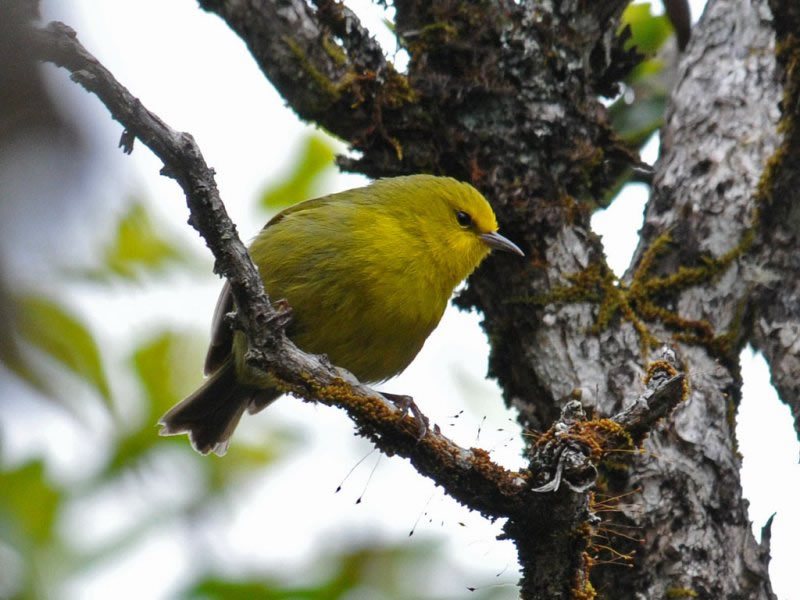
Maui ‘alauahio move along trunks, branches and twigs, flipping over bark and lichen in search of insects and grubs. Similar to Hawaiʻi ‘amakihi in appearance and behavior, ‘alauahio can be distinguished by their brighter yellow color, lack of prominent black lores, and straight bill.
Habitat and Behavior
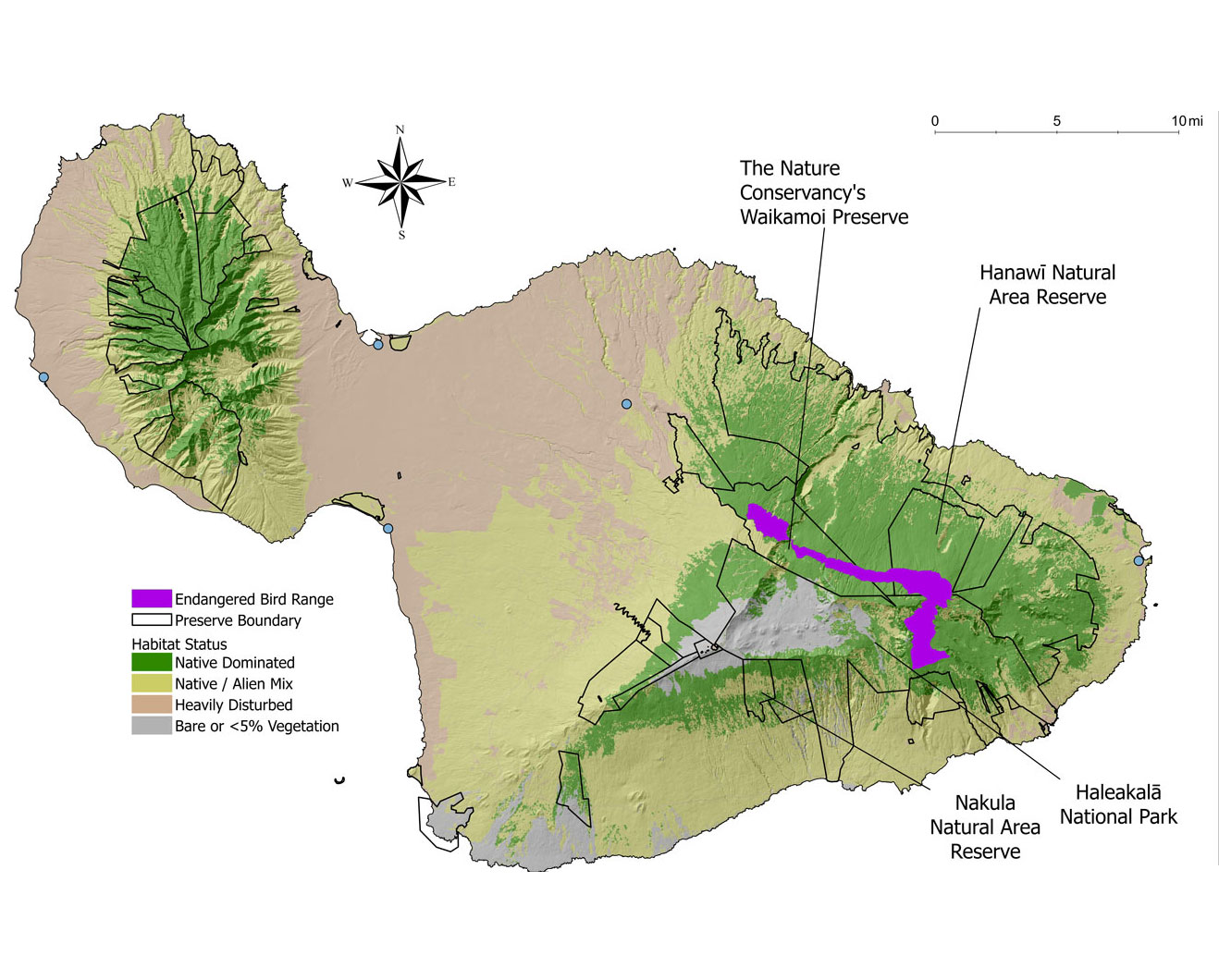
‘Alauahio forage among leaves and branches and occasionally explore the bark of larger trunks. ʻAlauahio are very inquisitive little birds and often move through the canopy in small flocks. They can be found in the high elevation native forests of Haleakalā above 5,000 feet. They are also sometimes seen in high elevation, non-native tree plantations like Polipoli Springs State Park.
Past and Present
Historically ‘alauahio were common throughout Maui and on Lāna‘i. They are now only found on the slopes of East Maui, having gone extinct on Lāna’i and and no longer found in the West Maui mountains. Maui ʻalauahio are impacted by loss of forest habitat, disease from invasive mosquitoes and introduced predators like feral cats, rats and mongoose.
Conservation Efforts
Maui ʻalauahio survival depends on the conservation and restoration of native forest habitat, and mitigating disease from introduced mosquitoes. Click here to watch on Youtube.
Non-native Forest Use by Maui ʻalauahio
Graduate student Peter Motyka investigated the use of non-native forest by native birds, like ‘alauahio, in the Kula Forest Preserve where introduced conifer tree species dominate the landscape.
Helpers
Maui ʻalauahio “helpers” are offspring from the previous year who help feed the female (their mother), and her current nestlings and fledglings. Fledglings are fed for two to three months, and young remain with their parents in family groups for 18 – 20 months.
Listen to ‘Alauahio
The ‘alauahio contact call is a loud “cheep”. Their song consists of a repeated whistled phrase “whichy-wheesee-whurdy-whew”.