Kiwikiu
Maui Parrotbill; Pseudonestor xanthophrys
Conservation Status:
Critically endangered
Food:
Insects, nectar
Habitat:
5,000 ft +
Description
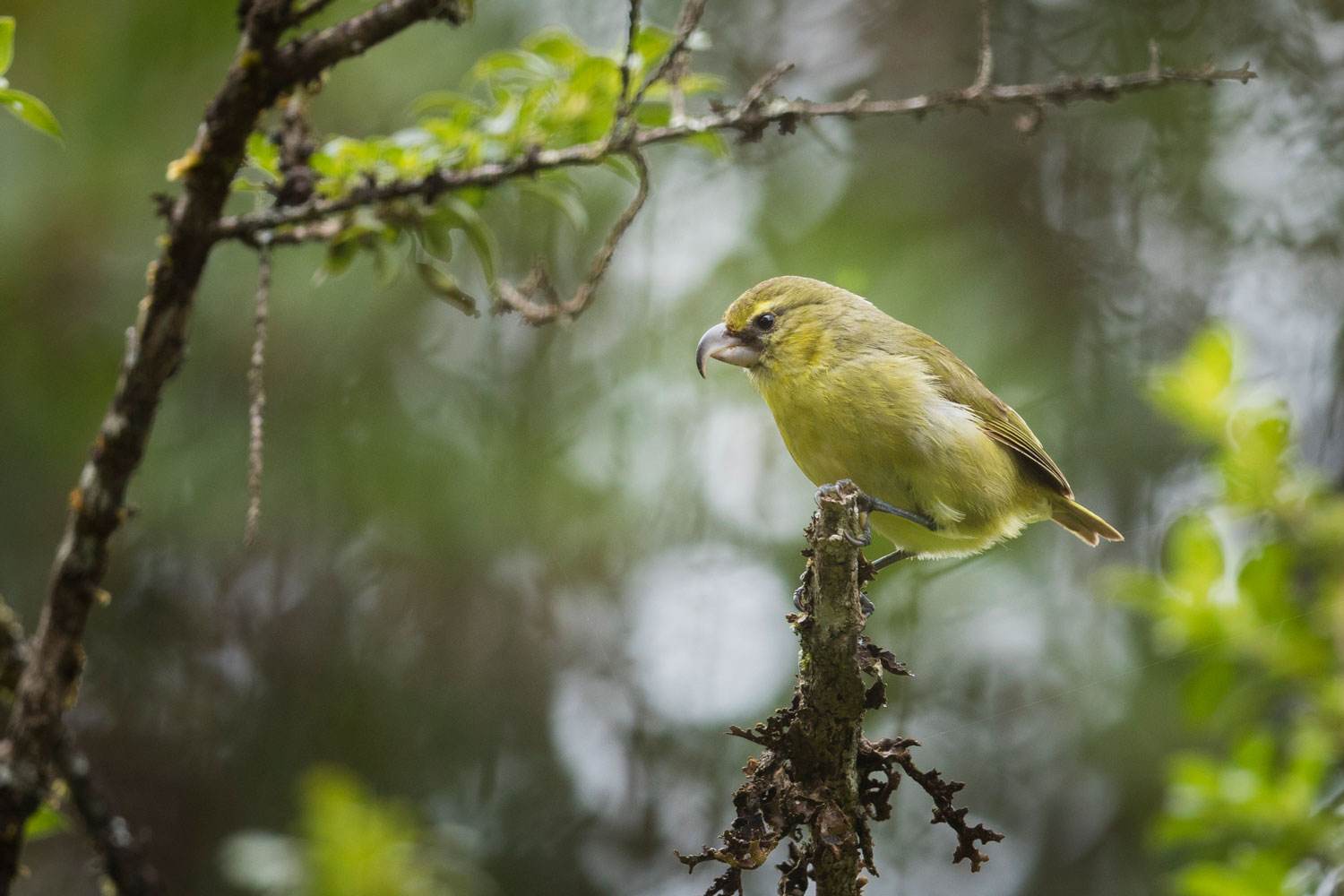
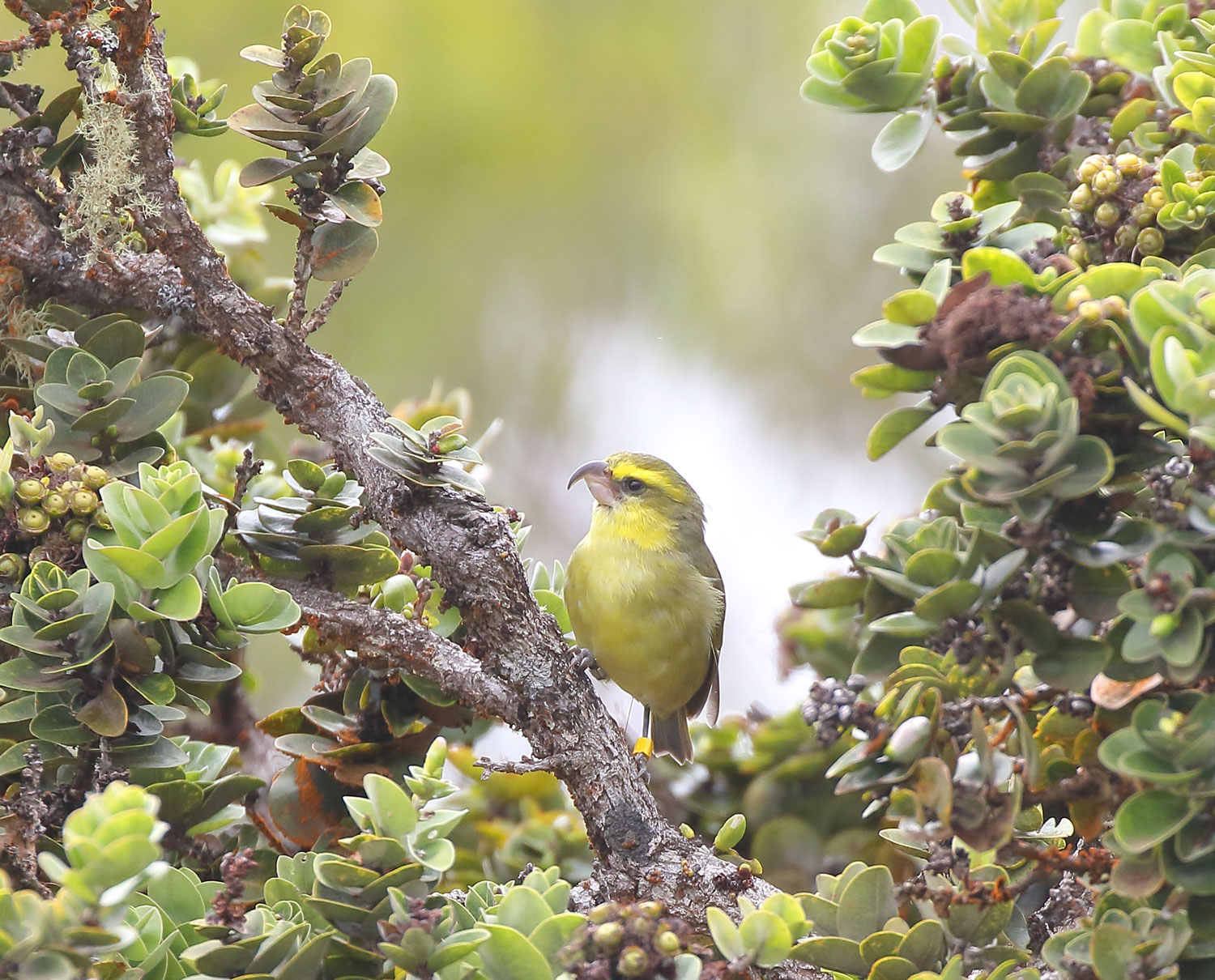
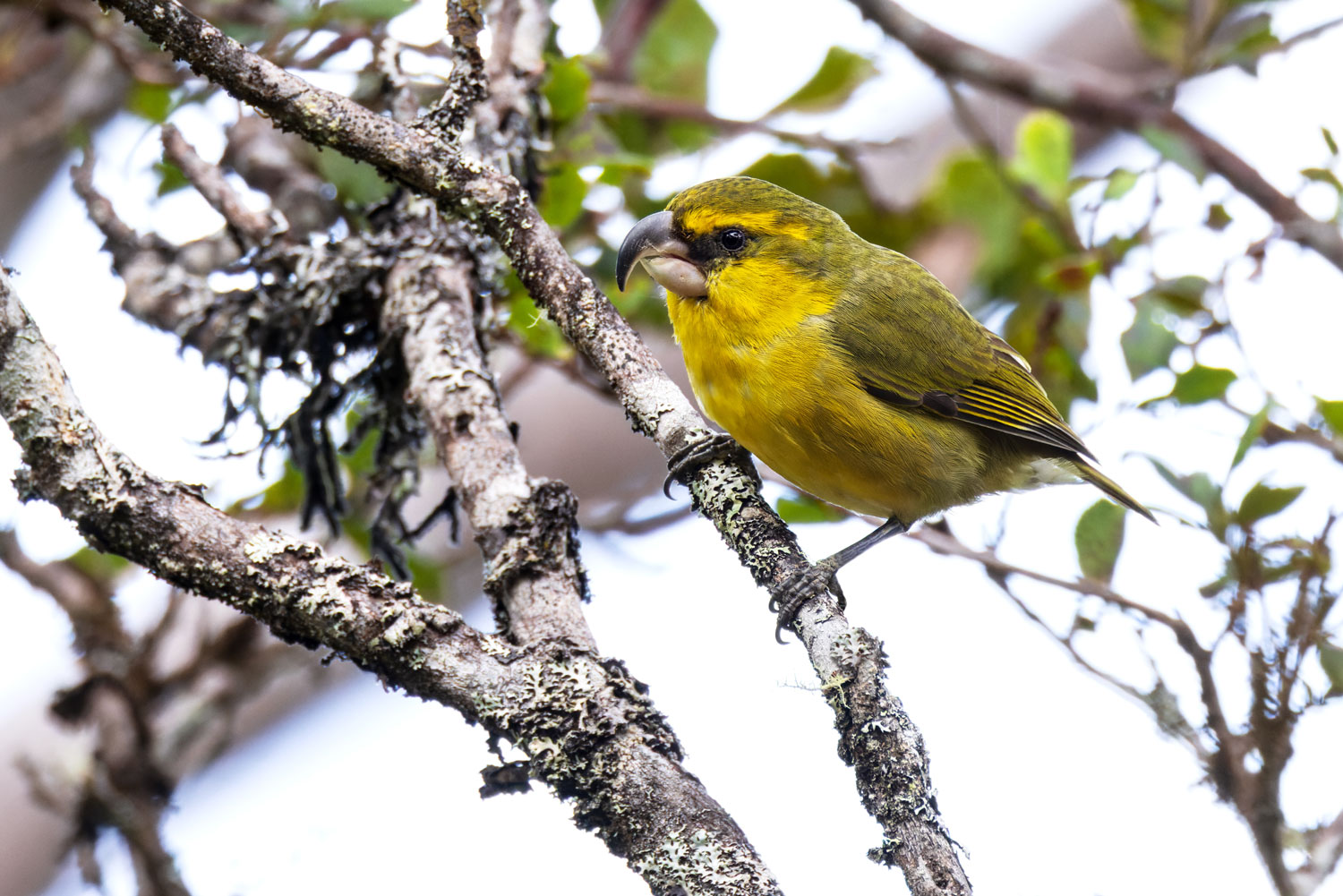
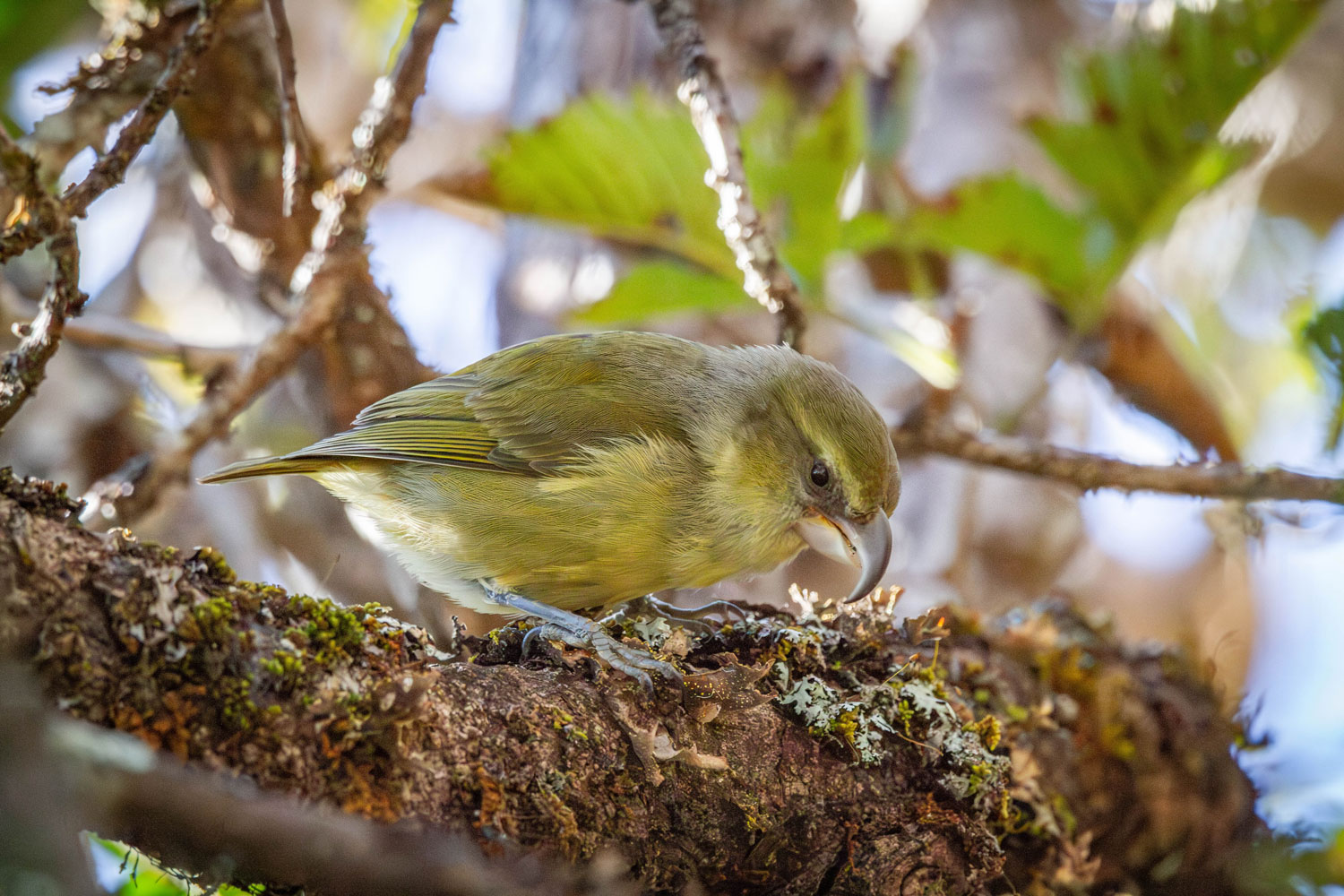
Kiwikiu, or Maui parrotbill, use their large parrot-like beaks to split branches and small fruits in search of insect larvae, their primary prey. Adult kiwikiu are 5 to 6 inches long, olive-green above and yellow below, have a distinctive yellow eye-stripe, and a short tail. Females tend to be less colorful and have smaller bills than males. Immature kiwikiu are greyish-olive above and pale yellow below with whitish eye-stripes.
Habitat and Behavior
Kiwikiu are monogomous and can live as long as 16 years. They typically produce only one offspring every year or two. Immature kiwikiu sometimes remain with their parents for up to 17 months, learning to forage. Kiwikiu are presently restricted to a tiny sliver of high elevation forests on northeastern Maui. They are typically found foraging on the branches of native plants like ʻōhiʻa, ‘ākala, koa, ‘ōlapa, pilo, and kanawao. They will often split open berries for insect larvae.
Past and Present
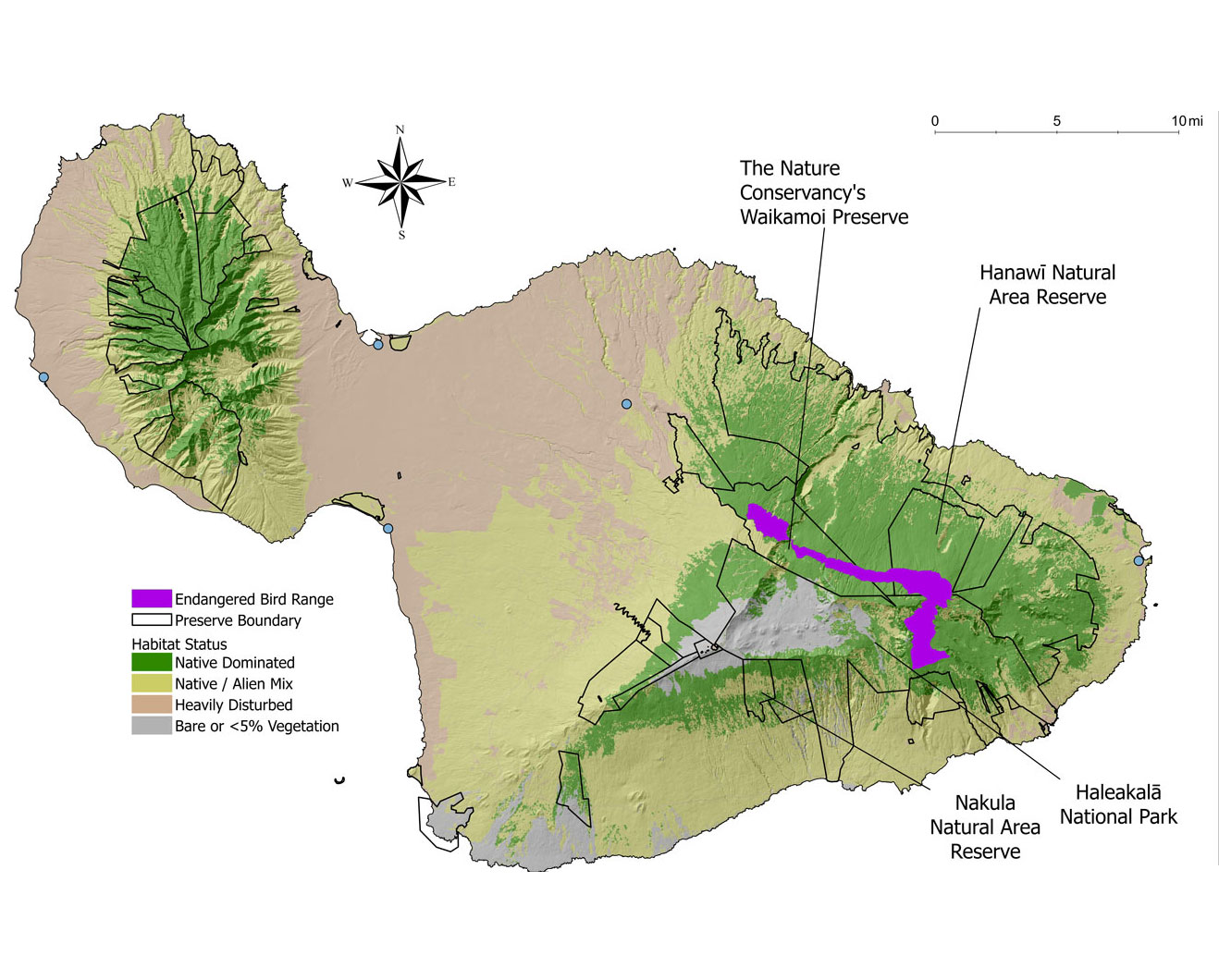
Kiwikiu used to be found all over Maui and Moloka’i. Now, fewer than 150 individuals are estimated to exist. Their current range is extremely restricted to a high elevation forest area of 5,325 acres (2,155 hectares), within an area overlapping Hanawī Natural Area Reserve, Haleakalā National Park, and The Nature Conservancy’s Waikamoi Preserve. Kiwikiu pairs occupy home ranges as large as 35.8 acres (14.5 hectares).
Conservation Efforts
Kiwikiu are listed as critically endangered. Factors contributing to kiwikiu population decline include habitat destruction by humans and feral pigs, avian diseases spread by introduced mosquitoes, and predation from introduced predators such as feral cats and mongooses. Current conservation efforts include surveying the kiwikiu population range and abundance, and using conservation techniques to decrease invasive mammals and disease spread by mosquitoes.
Watch Them in Action
See a video of an adult male kiwikiu foraging in the wild. Here a banded male uses his over-sized bill to dig in bark of an ‘ōhi‘a tree in the search for insect larvae.
Changing the Name
The original Hawaiian name was lost in history but a new name, kiwikiu, was created by the Hawaiian Lexicon Committee in 2010. Watch the naming ceremony here.
Listen to Kiwikiu
Hear the chips, whistles and song of kiwikiu in the wild. It’s a rare and exciting thing to encounter a wild kiwikiu and it most often happens after hearing their calls.