‘I’iwi
Scarlet Honeycreeper, Drepanis coccinea
Conservation Status:
Threatened
Food:
Nectar
Habitat:
4,500 ft +

Description
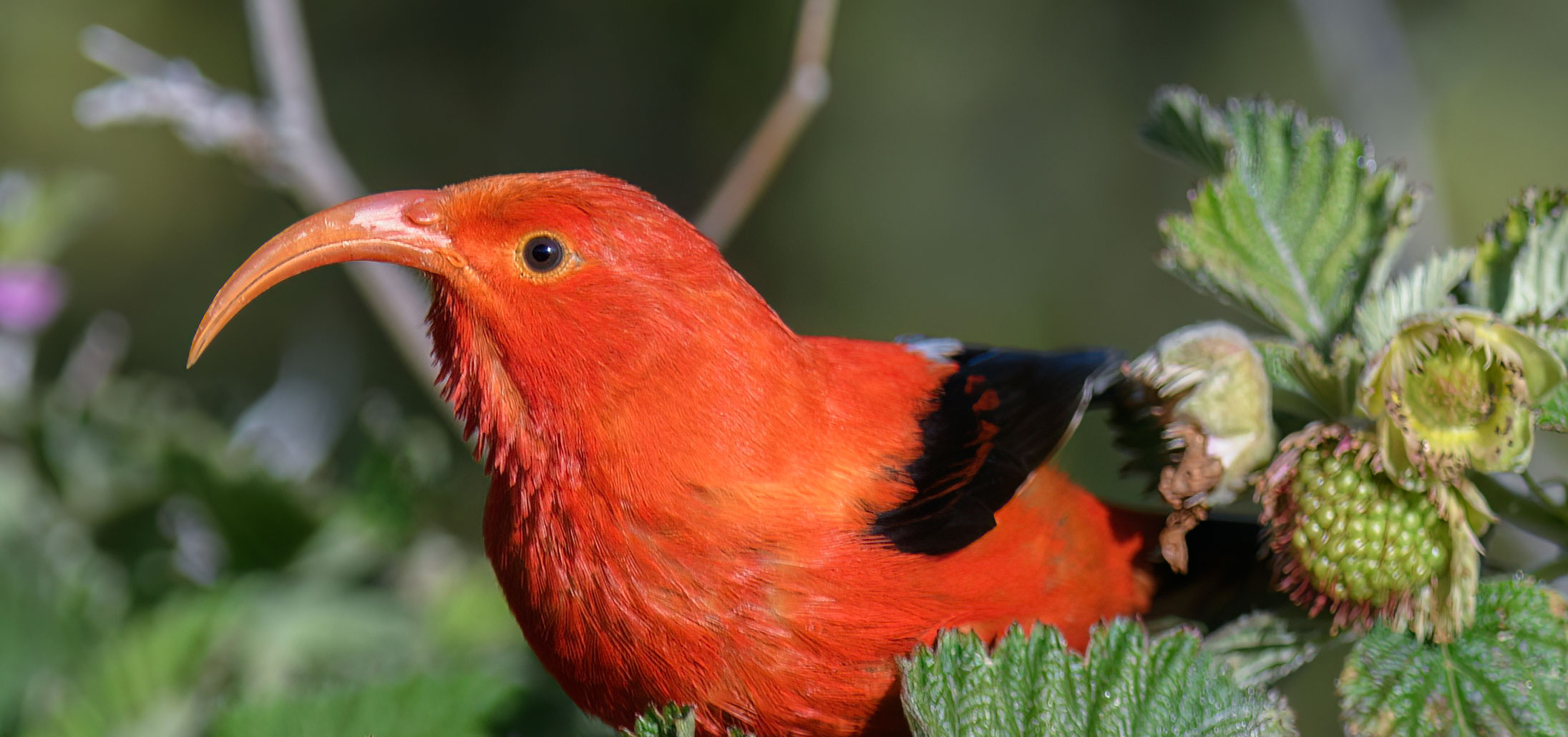
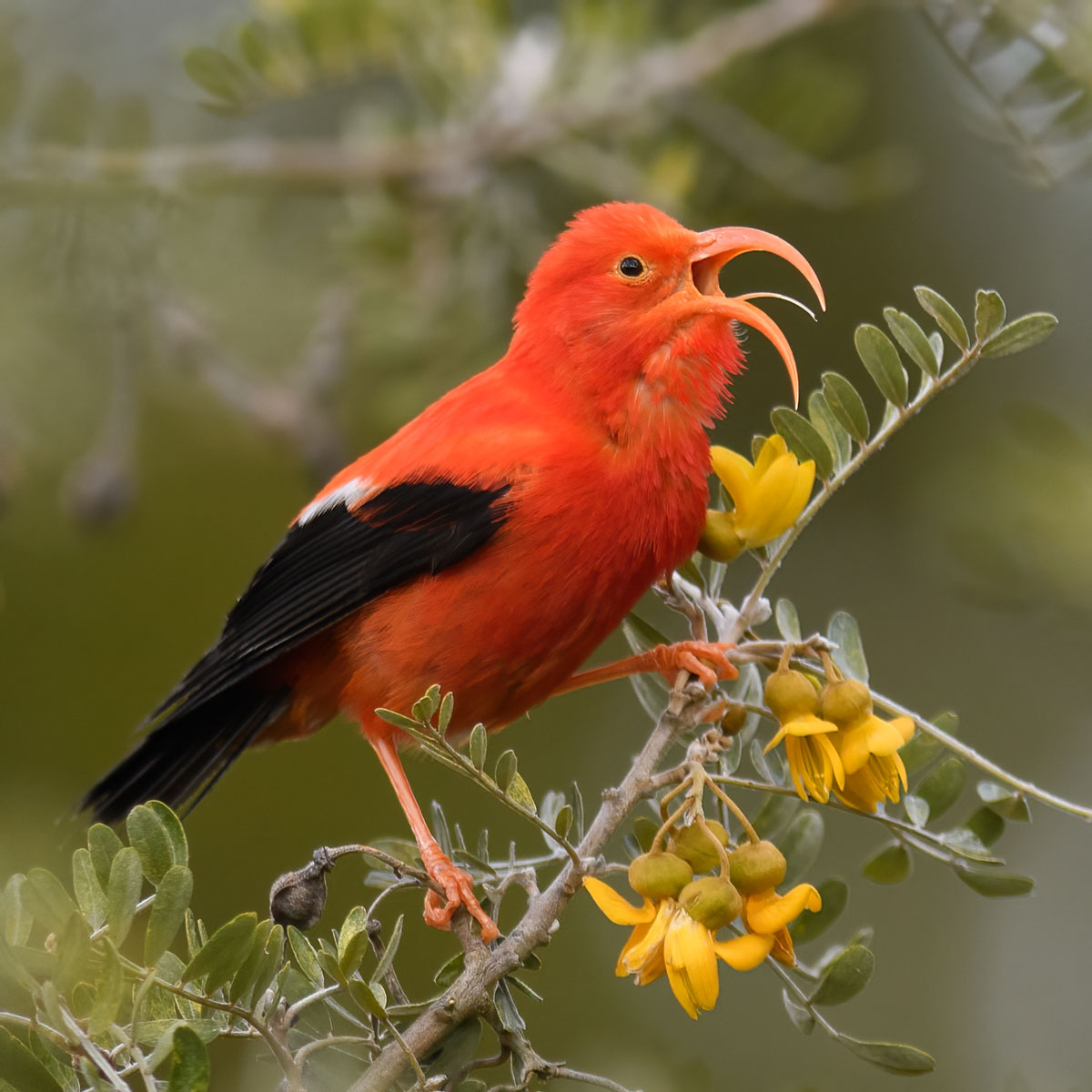
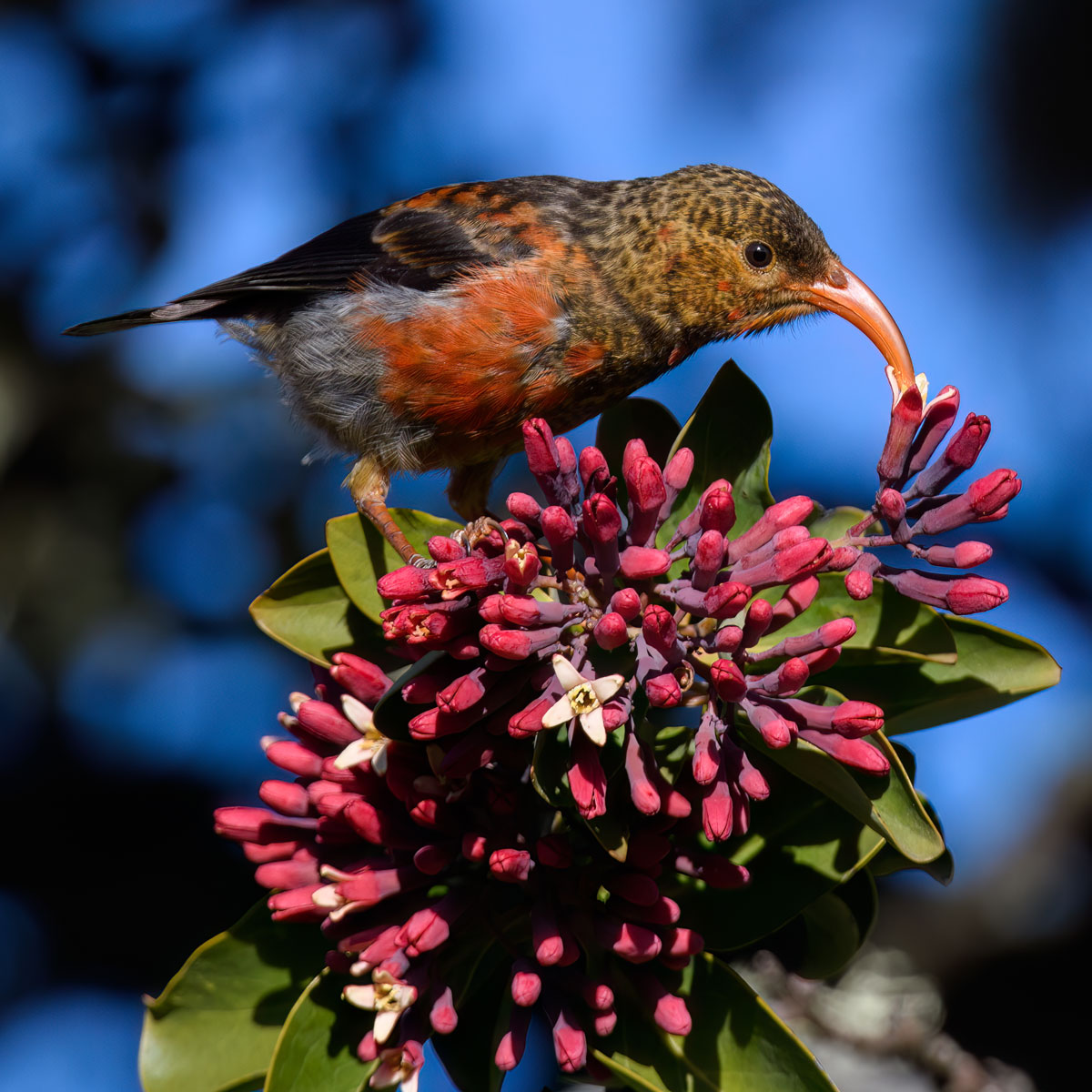
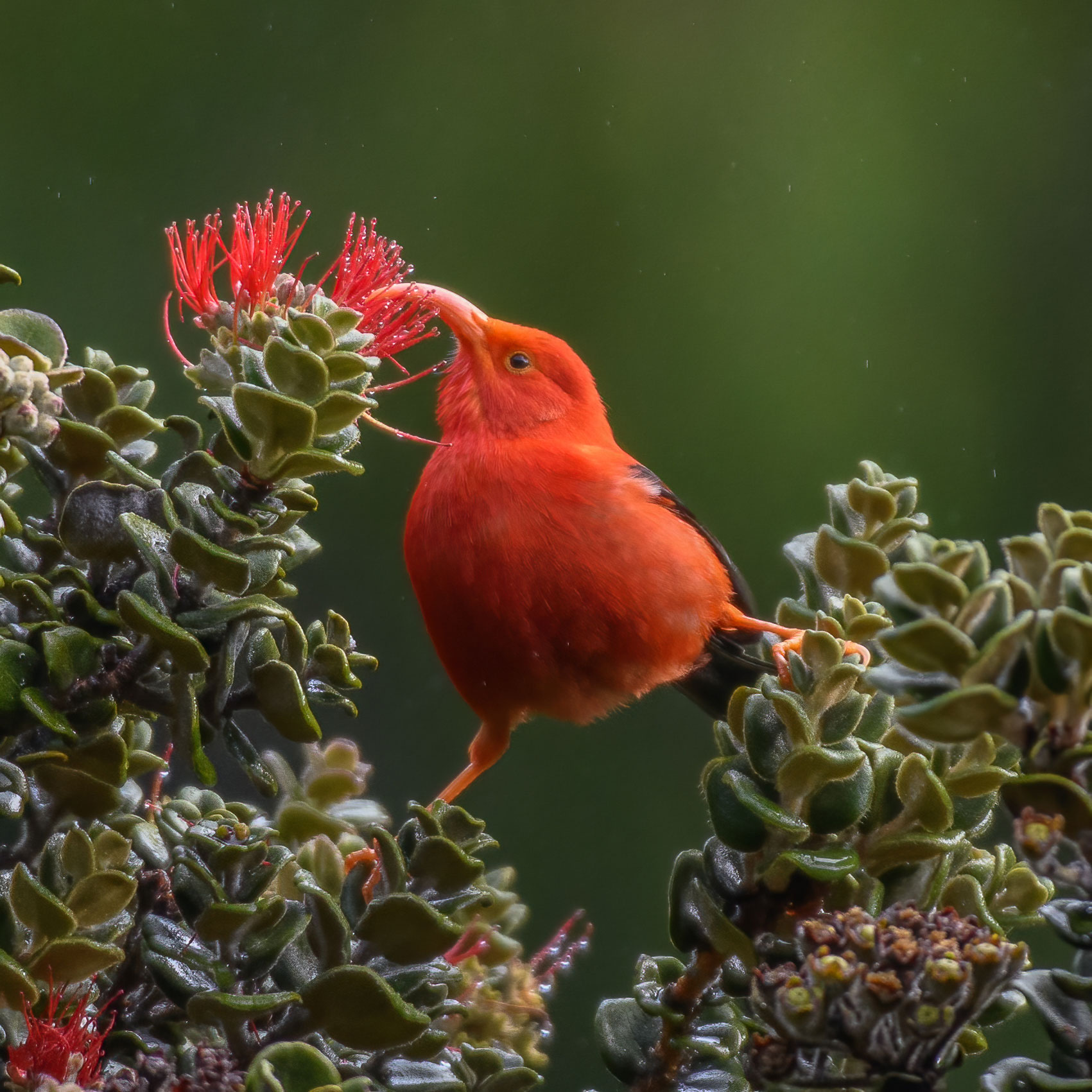
The ‘iʻiwi is a brilliant scarlet red honeycreeper, about 6 inches in length. They have black wings, a black tail, and a conspicuous peach-colored decurved bill. The ʻiʻiwiʻs bright colors and unique bill make them one of the most recognizable honeycreepers. Their long decurved bill is perfectly adapted to feeding on long, tubular flowers like the endemic Hawaiian Lobelioids (Campanulaceae). However, they will drink nectar from a wide variety of plant species including some with very small flowers like ʻiliahi (Hawaiian sandelwood). Immature ʻiʻiwi are yellow and red with black spots.
Habitat and Behavior
ʻIʻiwi are often found in flowering ʻōhiʻa lehua, māmane, and ‘ākala. ʻIʻiwi rarely stop moving and often call while they forage. ʻIʻiwi wings produce an audible flutter in flight. ʻIʻiwi are loud and raucous and, like ʻākohekohe, are often aggressive to other species near nectar sources.
Past and Present
ʻIʻiwi are endemic to the main Hawaiian islands and now survive in native forests above 4,500 ft. They can be seen at high elevation on Hawai’i Island and Maui, and are becoming rare on Kaua’i. They are thought to be extremely rare or extinct on Moloka’i and Oʻahu. Once widespread, this species has seen the a drastic population decline in recent decades because of introduced mosquito-borne disease.
Conservation Efforts
ʻIʻiwi are listed as Threatened under the Endangered Species Act (ESA). ʻIʻiwi are highly susceptible to avian malaria from introduced/invasive mosquitoes. Working to restore healthy, high elevation forest that is ungulate and mosquito free will help protect the birds. Measures to control invasive species like feral cats, rats, mongooses, and mosquitoes are essential to ensure the survival of this iconic hoenycreeper.
Cultural Significance
ʻIʻiwi, and the other honeycreepers are deeply revered in Hawaiian culture. The eye-popping crimson color of this unique honeycreeperʻs feathers were used in regalia and the cloaks of Hawaiian royalty.
ʻIʻiwi listed as Threatened under ESA, 2017 (USFWS)
Once one of the most common forest birds in the Hawaiian Islands, ʻiʻiwi are now protected as a Threatened species under the Endangered Species Act.
Listen to ʻIʻiwi
ʻIʻiwi have a varied repertoire of creaks, whistles, gurgles, and reedy notes often joined into a halting song. A loud rusty-hinge call is diagnostic. Sometimes produces humanlike whistles or imitates other native birds.