Honeycreeper Research
Forest Bird Monitoring
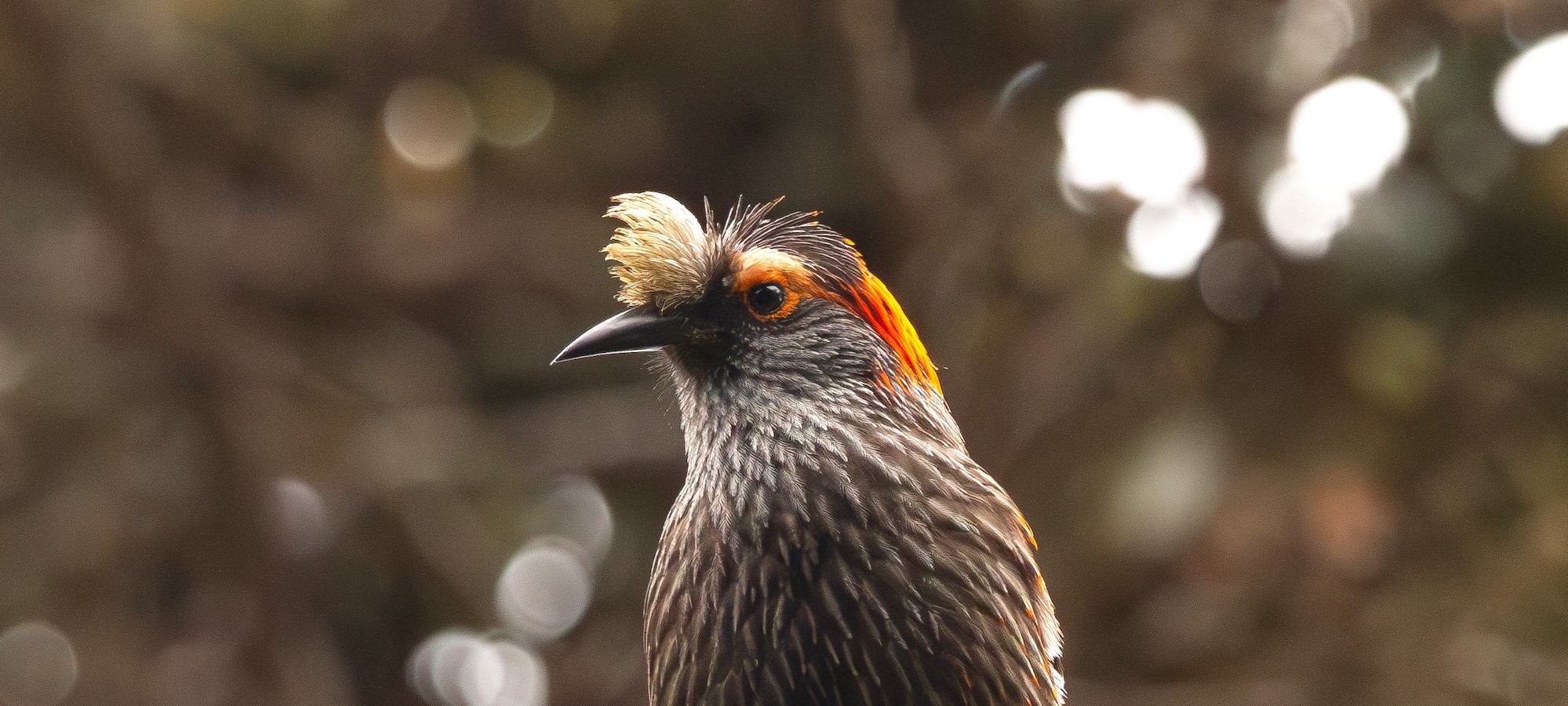
We monitor wild forest bird populations, estimating their sizes and distribution. Our research gathers data on forest bird breeding biology, food resources, disease susceptibility, and population-limiting factors. We are working diligently to prevent extinction and to promote biodiversity and ecosystem function.
Ultimately, our efforts seek to prevent extinction and to promote biodiversity and ecosystem function.
Objectives
- Monitor the status and distribution of native forest bird populations and their characteristics in remote forest areas throughout Maui Nui
- Conduct searches for populations of rare and endangered species.
- Determine status and condition of forest bird habitat, including key components: presence of avian disease, predators or food resources

Native Forest Bird Surveys
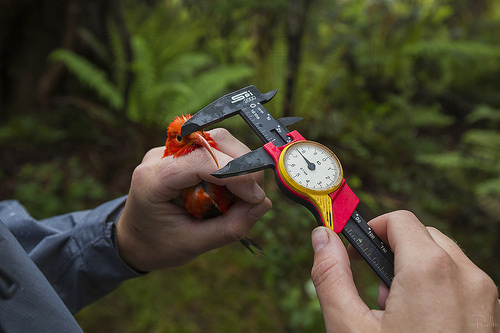
Forest bird surveys are conducted in key native forest bird habitat. These surveys use the same transect lines established over decades of statewide surveys, as well as additional transects needed to fill in species range gaps. Additional field surveys and observations are conducted to collect information on rare species behavior, population density estimates, and reproductive success.
Threat Mitigation
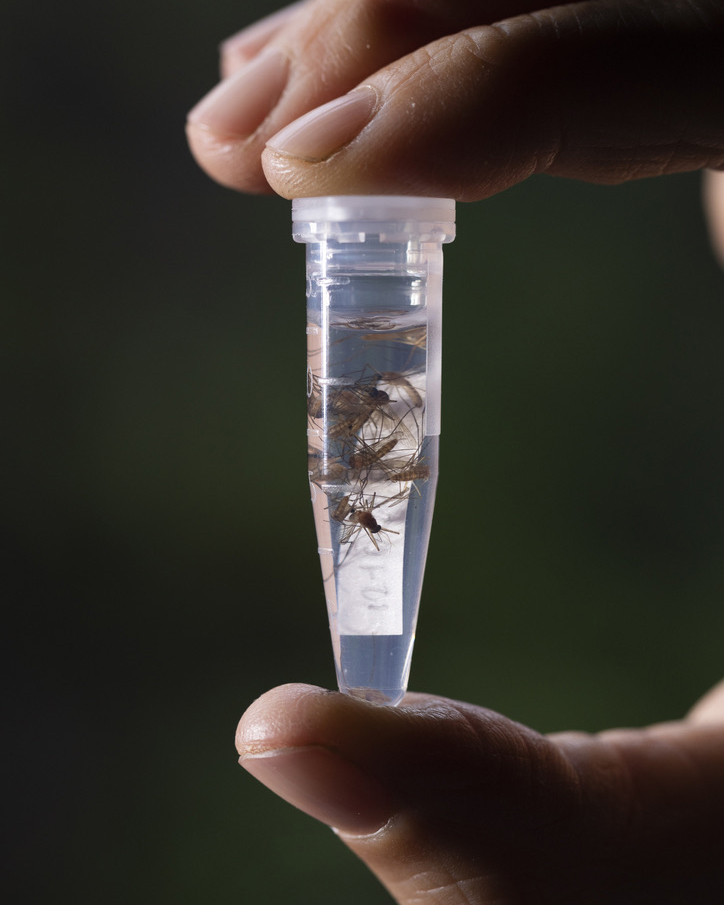
We aim to manage and mitigate threats to birds and their habitats, working to restore native forest ecosystems by reducing invasive species and planting native trees. Controlling introduced predator populations and developing strategies to address non-native, disease-spreading mosquitoes are key elements to the protection of native forest birds. Using conservation translocations and reintroduction techniques, we collaborate with captive breeding centers to establish self-sustaining populations and prevent extinction in the wild.
Cooperators in this project include the US Fish and Wildlife Service, National Park Service, State of Hawaiʻi Dept. of Land and Natural Resources,The Nature Conservancy of Hawai’i, USGS, and private partners.