Hawai‘i ‘Amakihi
Chlorodrepanis virens
Conservation Status:
Vulnerable
Food:
Insects, nectar
Habitat:
3,000 ft +
Description
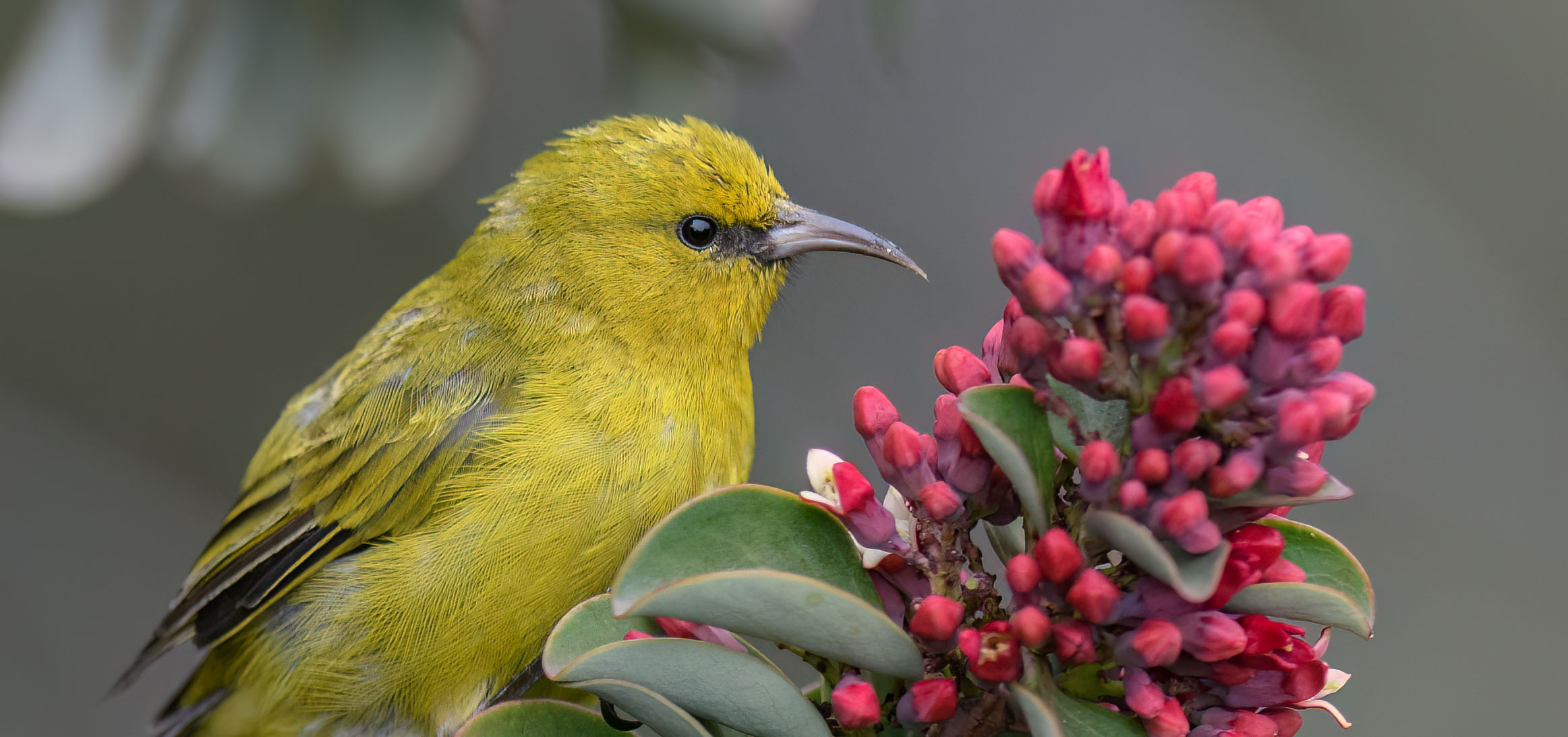
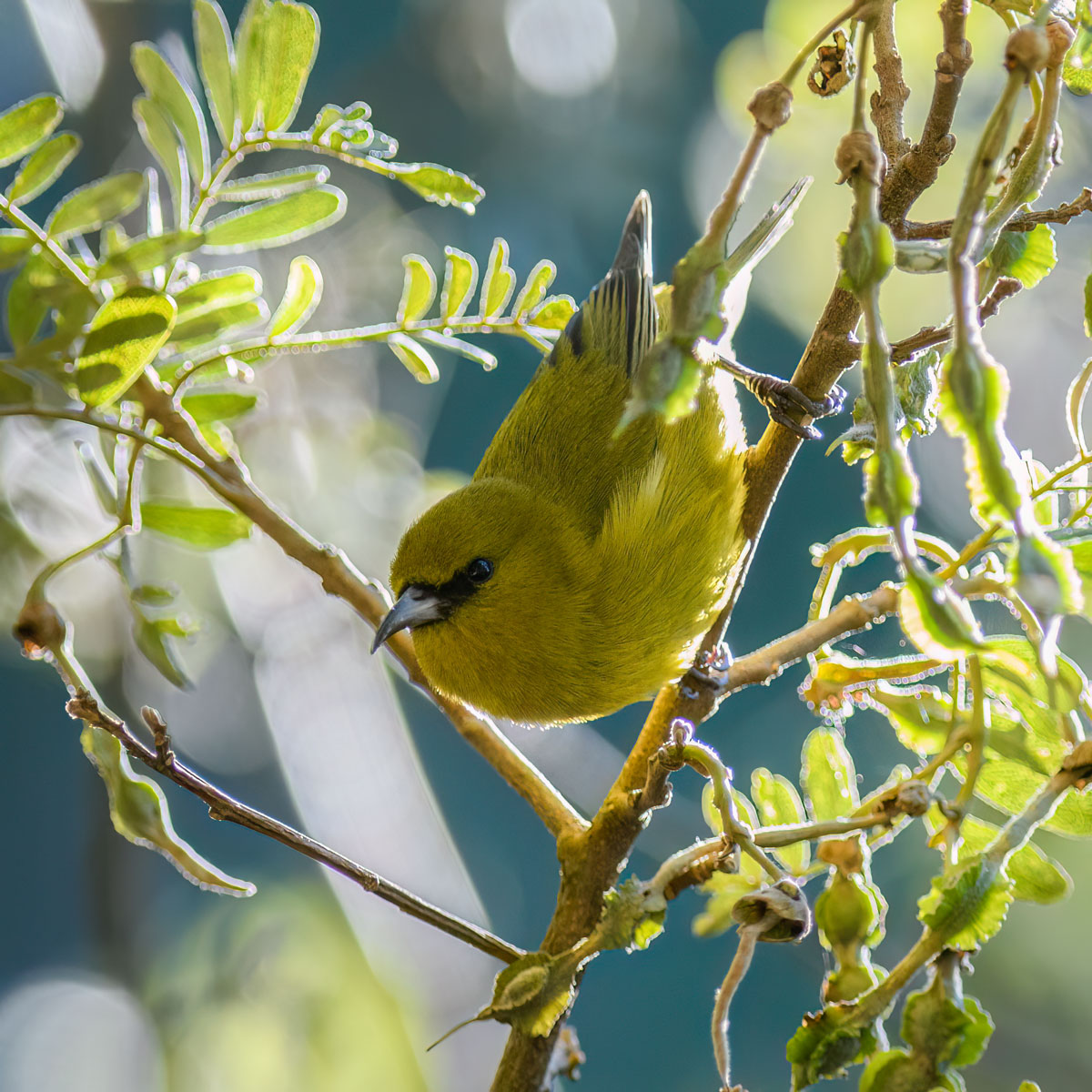
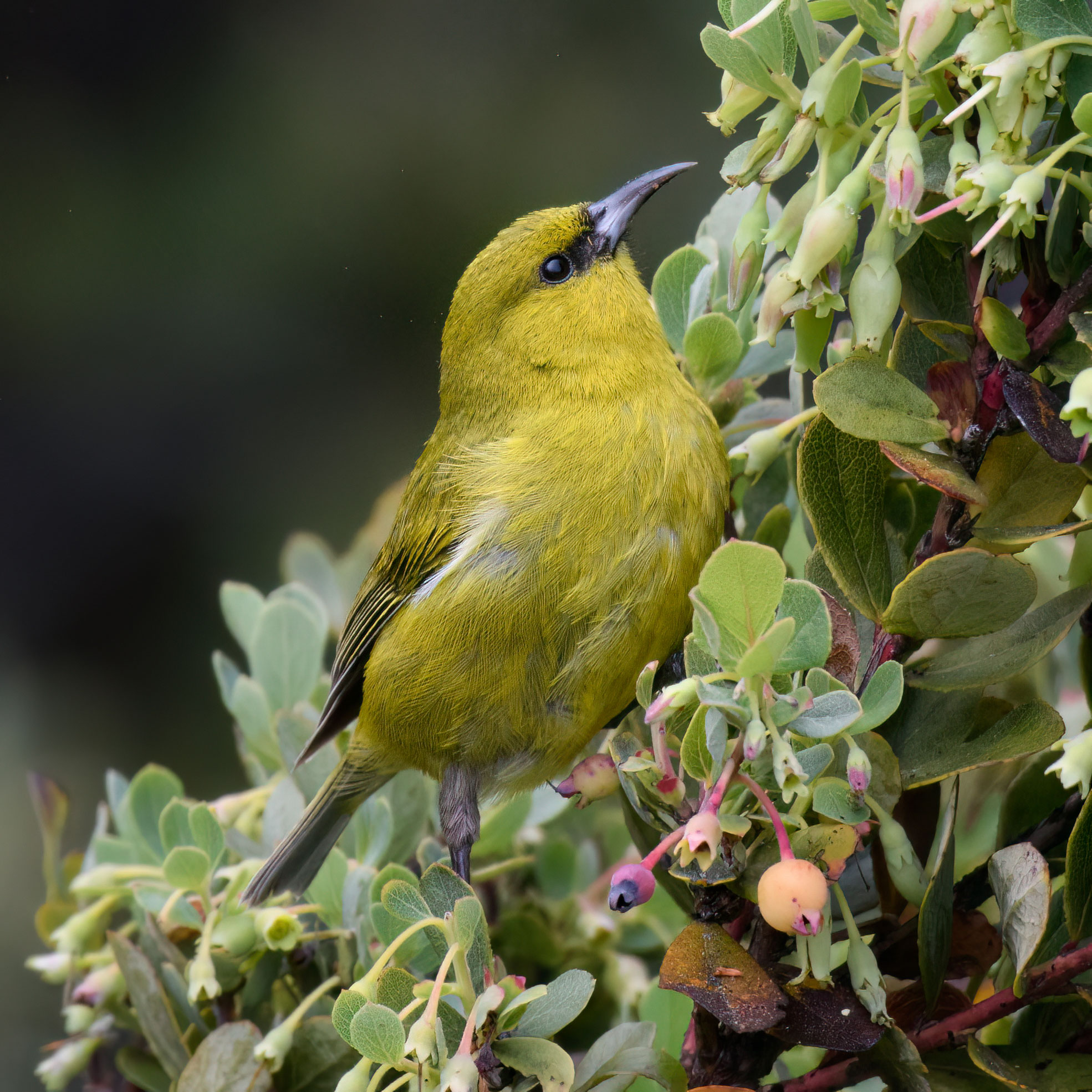
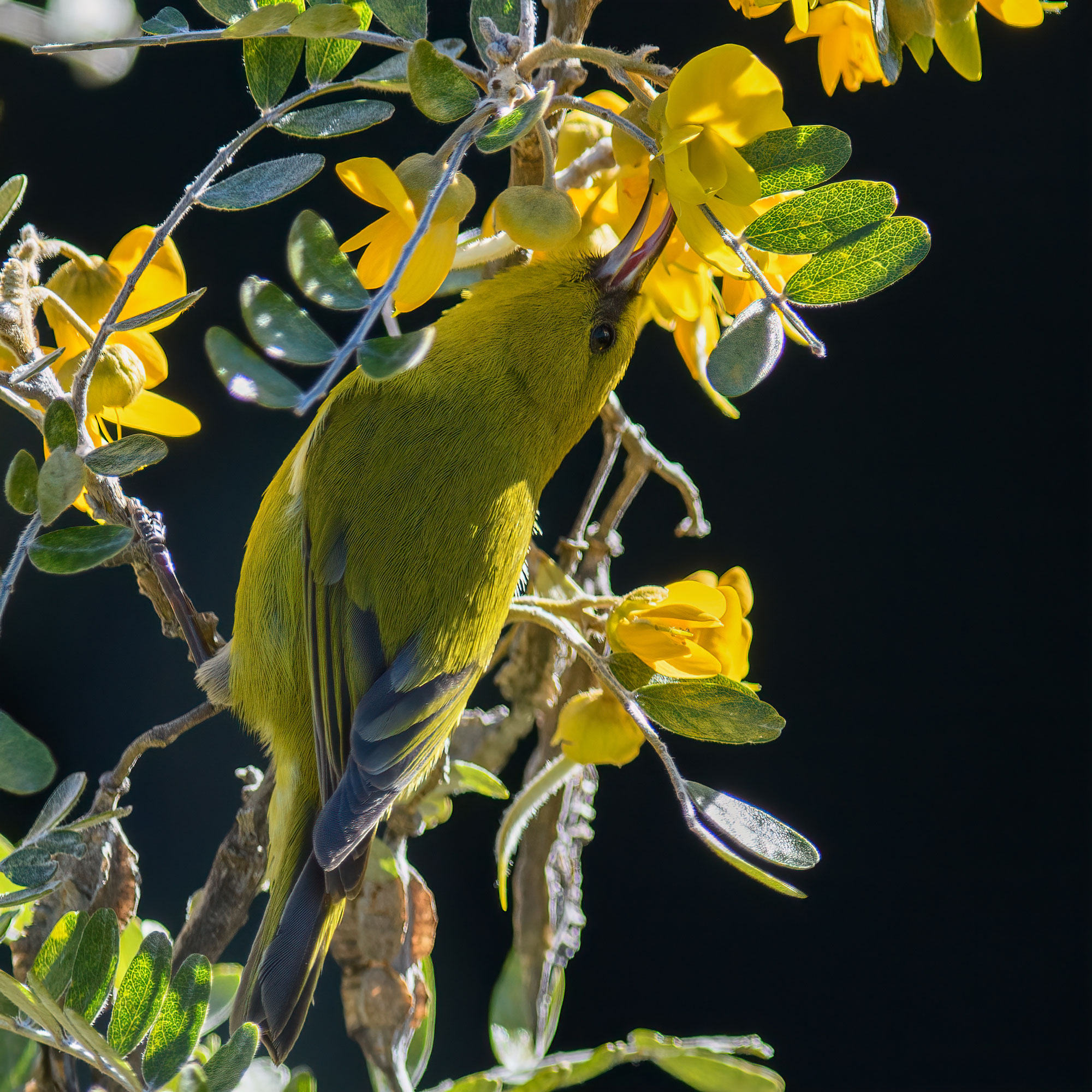
Hawaiʻi ‘amakihi are one of the more widespread native honeycreepers. Hawaiʻi ‘amakihi have a slightly down-curved bill, often times have black lores (area between the eye and bill), and are a bright yellow- green. ʻamakihi resemble several other birds including the introduced Japanese White-eye and the Maui ‘alauahio.
Habitat and Behavior
Hawaiʻi ‘amakihi sip nectar from the flowers of a variety of native plants and trees and pick bark in search of insects. They often travel in small flocks and prefer drier and more open forest.
Past and Present
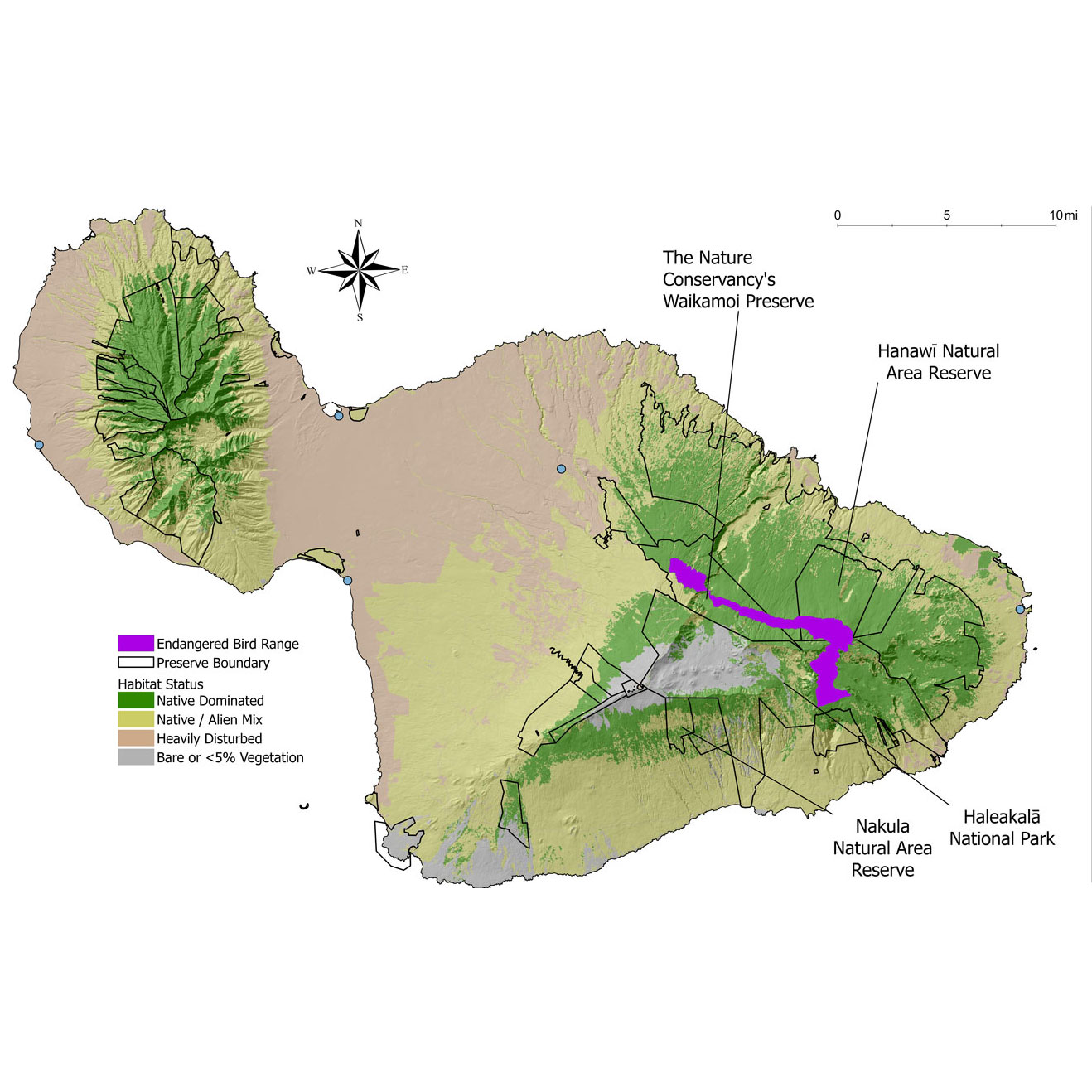
Endemic to the Hawaiian Islands, with two subspecies on Maui and Hawai’i, ‘amakihi are one of the more adaptable of Hawaiʻiʻs native forest birds. They are relatively abundant on Hawai’i and Maui, found in small areas of Moloka’i, and extirpated from Lāna’i.
Conservation Efforts
Hawaiʻi ʻamakihi are found at lower elevations than most other honeycreepers, indicating some level of resistance to avian malaria. These low-elevation forests may serve as important grounds for coevolution of native birds with disease. Read more about the Hawai’i ‘amakihi and avian malaria here.
Hawai’i ‘Amakihi in Waikamoi
Watch this MFBRP video of a male Hawai’i ‘amakihi calling out in Waikamoi Preserve.
‘Amakihi Resistance to Avian Malaria
There is now evidence that Hawai’i ‘amakihi are evolving disease resistance and/or tolerance to avian malaria. ʻAmakihi are sometimes found in lower elevation areas that have mosquitoes and disease. Read more about the Hawai’i ‘Amakihi’s resistance to avian malaria.
Listen to ‘Amakihi
Hawaiʻi ʻamakihi call notes include a buzzy “tzeet”, an upslurred “queet”, and a thin “zeek”. ‘Amakihi song is a loud trill that maintains a fairly level pitch, swelling in intensity in the middle. They also have a complex, canary-like whisper song.