Cultural Significance
Woven through Hawaiʻi’s History
Ecocultural Connections
Native forest birds anchor both the ecological and cultural integrity of Hawai‘i. Not only do native forest birds play an essential role in maintaining Hawai‘i’s forest ecosystems, they also factor prominently into several aspects of traditional Hawaiian culture.
Ecologically, native forest bird foraging strategies support pollination and seed dispersal within the forest, sustaining native plant communities and the health of the forest canopy. Culturally, these birds carry stories that stretch back to creation, appearing in the Kumulipo (Hawaiian creation chant) and traditional mele and oli as embodiments of place, ancestry, and guidance. Protecting them is part of honoring the reciprocal responsibilities—kuleana—that tie people to the ʻāina (land). Their loss would erode not only the forests themselves but the cultural knowledge and relationships connected to them.
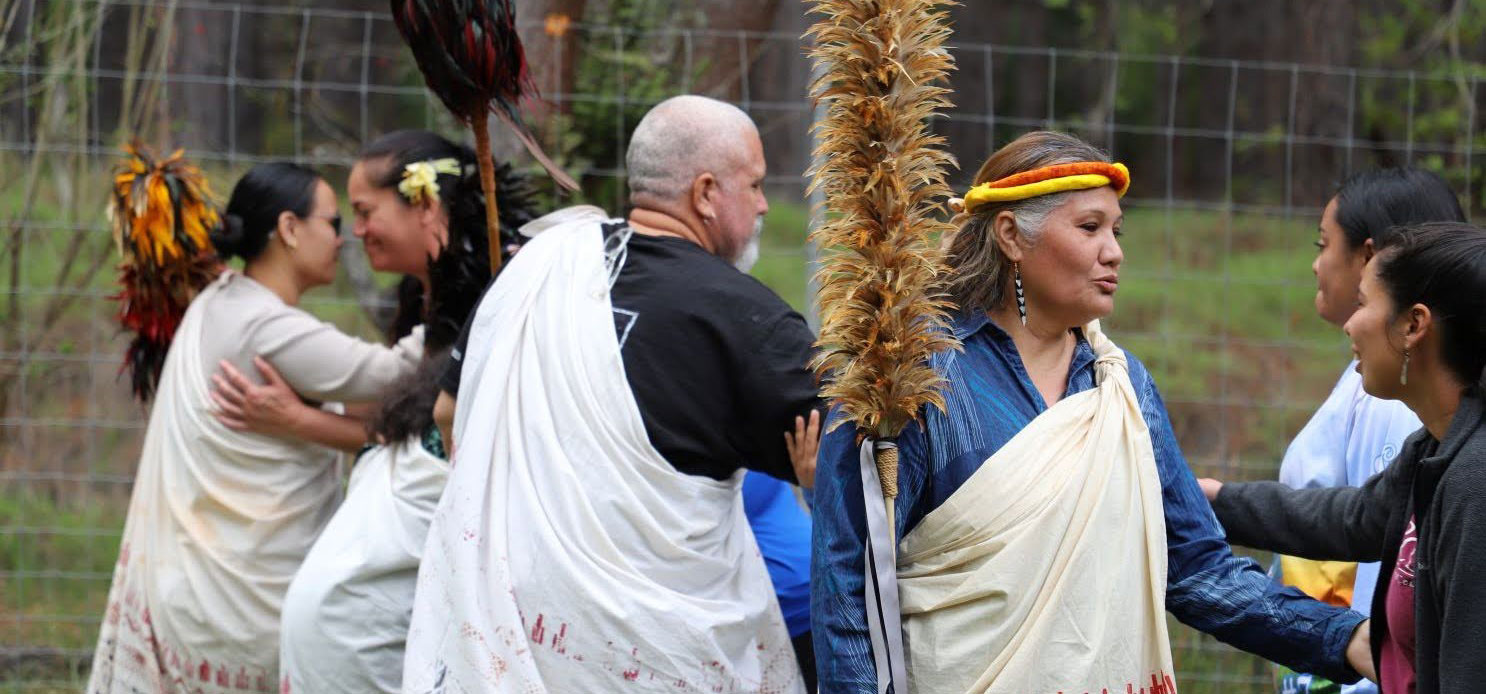
For many Native Hawaiians, taking care of and ensuring the survival of native species can be related to caring for a family member. Native forest birds as often regarded as conduits for akua, the divine, and function as the kinolau, or physical manifestations of deities. To some Native families they are ‘aumakua or family gods.
Embracing Native Hawaiian perspectives and protocols into conservation efforts on behalf of native forest birds is essential to species survival.
Embracing Native Hawaiian perspectives and protocols into conservation efforts on behalf of native forest birds is essential to species survival.
ʻApapane in Hawaiian Culture
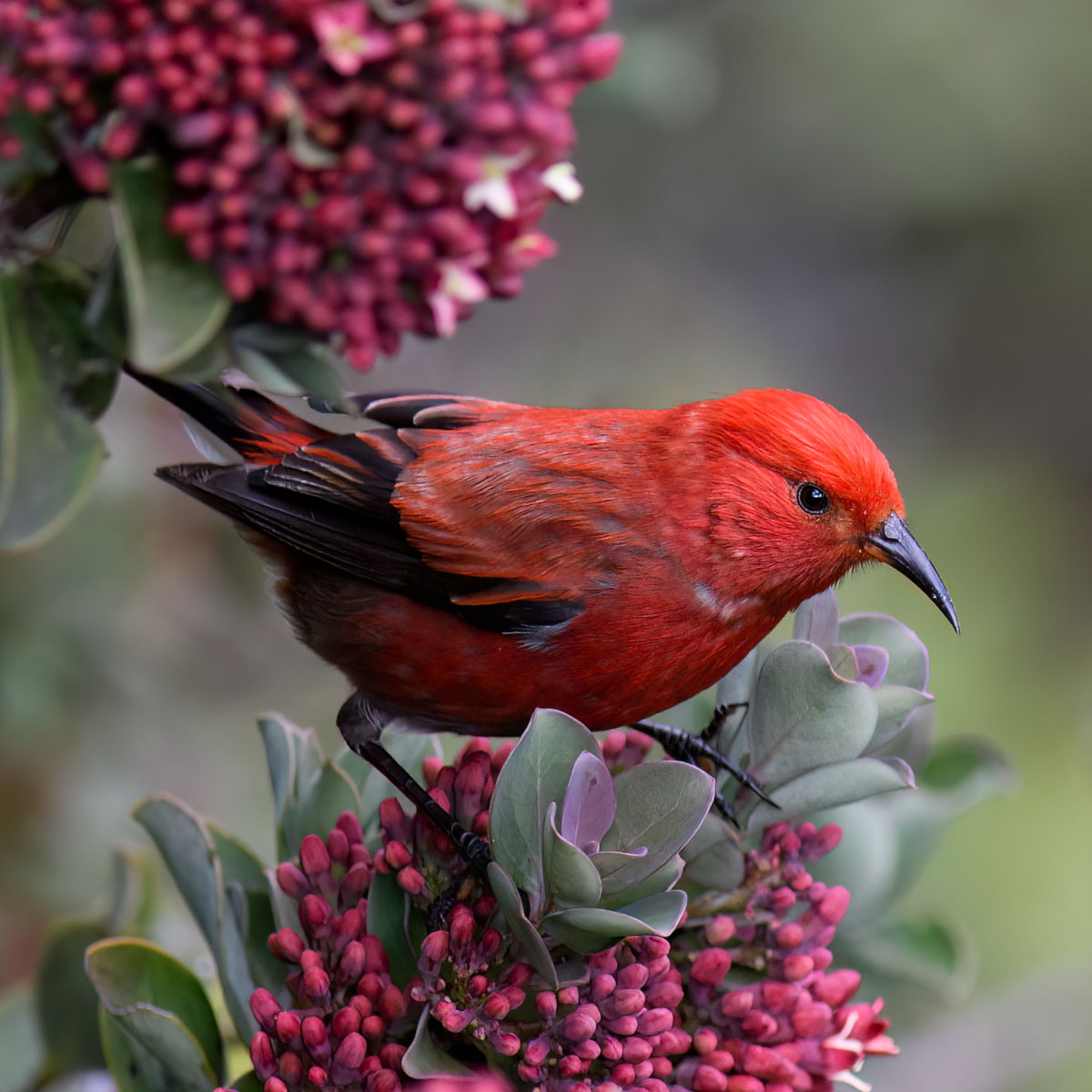
The ‘apapane (Himatione sanguinea) is one of the most common endemic honeycreepers in the Hawaiian Islands. Listen for their delicate songs as you hike Hawai‘i’s mountainous regions and look for the scarlet flocks flying to and from blooming ‘ōhiʻa lehua trees.
Like other native Hawaiian birds, ʻapapane are mentioned in the kumulipo, the Hawaiian creation chant. Ancient Hawaiians told many stories of deities and relatives taking the forms of birds like the ‘apapane.
La‘ieikawai’s Story
In this Hawaiian love story, Hawaiian honeycreepers are guardians of the Paliuli chiefess, La‘ieikawai. The ‘apapane is one of the honeycreepers that does her bidding.
As told by S.N. Hale‘ole, La‘ieikawai is a beautiful chiefess who is served upon and resides on the wings of supernatural Hawaiian honeycreepers. La‘ieikawai’s house is thatched with the royal yellow feathers of the ōʻō bird and she is attended to by ʻi‘iwi polena. While living amongst the honeycreepers, she catches the eye of a handsome Kauai chief, Kauakahialiʻi. He sends a servant to invite her to his dwelling and La‘ieikawai responds,
“When rings the note of the ōʻō bird, I am not in that sound, or the ʻalalā (Hawaiian crow), I am not in that sound; when rings the note of the ‘elepaio then am I making ready to descend; when the note of the ‘apapane sounds, then I am without the door of my house; if you hear the note of the ʻi‘iwi polena, then I am without your ward’s house; seek me, you two, and find me without. That is your ward’s chance to meet me.”
La‘ieikawai’s suitor listens to the birdcalls for announcement of the beauty’s arrival. The first night she does not come but on the second night, after the ‘apapane’s song rings at dawn, La‘ieikawai appears at Kauakahialiʻi’s door, resting on the wings of her birds.
Hawaiian Feather Work
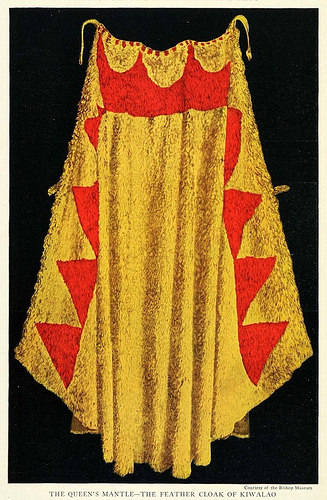
One demonstration of the deep connection between kānaka maoli (Native Hawaiians) and native forest birds is demonstrated in the intricate art of Hawaiian feather work. The tightly woven feather adornments were displayed in cloaks and leis worn by nobility (ali‘i). Certain feather works could take up to a year to complete.
Hawaiian bird catchers, kia manu, collected the necessary feathers from a number of colorful honeycreeper species.
Kia manu used natural sticky latexes, either from ‘ulu trees (Artocarpus altilis) or the outer layer of Pāpala kēpau seeds (Pisonia brunoniana) to capture forest birds. The latex was applied to ‘ōlapa branches (Cheirodendron trigynum) that were placed throughout the forest. If a bird, such as an ‘i‘iwi, perched on the branch, it stuck to the latex and the kia manu could collect the needed feathers. The collected feathers were sorted by size, shape, and color, they were strung in bundles that were then tightly woven in overlapping rows on the naepuni.
Hawaiian ali‘i wore feather cloaks on special occasions or into battle. Initially only high ranked men wore feathered cloaks, but after the death of Kamehameha the Great, his daughter Nāhiʻenaʻena and other women of rank decided to obtain their own feather works to wear at peaceful occasions.